Organic mattresses · Materials & comfort
Latex Mattress Layers: What to Know Before Comparing Naturepedic Options
Latex can feel buoyant, gently contouring, or distinctly firm, depending on the way it is made and where it sits in a mattress. Before comparing Naturepedic models, look beyond the word “latex”: layer thickness, latex type, firmness, surrounding materials, and the whole construction all help determine whether a bed is likely to suit your sleep style.
A practical guide to mattress materials, pressure relief, airflow, and fit.
There is a certain appeal to a mattress described in a single, simple word. Latex sounds like a material and a promise at once: responsive support, a little spring, perhaps a more considered approach to what lies beneath the sheets. But that shorthand can obscure the most important details. A latex mattress is not one universal design, and two beds containing latex may feel remarkably different.
For anyone exploring Naturepedic options, the useful task is not to decide whether latex is “good” in the abstract. It is to work out what each model’s layers are intended to do, how the material is arranged, and whether that arrangement suits your body and preferred sleeping position. Product specifications can change, and models may differ in materials and available configurations, so confirm details for the exact mattress you are considering rather than assuming every bed from one brand uses the same recipe.
This guide explains the vocabulary and comparison points that make those specifications easier to read. It is about construction and personal fit—not a guarantee that one material or mattress will improve sleep for everyone.
Why “latex” does not describe the whole feel
Latex is a resilient material used in mattress comfort and support layers. In broad terms, it tends to respond more quickly to pressure than many slow-recovery foams. Some sleepers experience that response as buoyant or springy; others notice a gentle contour that does not feel as enveloping as a slow-sinking surface. Neither description is universal. The feel depends on the latex formulation, its firmness and thickness, the cover, and the materials underneath it.
A mattress is a system of layers, not a single ingredient. A softer upper layer may cushion the shoulders and hips, while a firmer layer below helps limit how far the body settles. A separate support core, which may use different materials, affects the bed’s overall stability. Even a small change in layer order or thickness can alter how the surface responds.
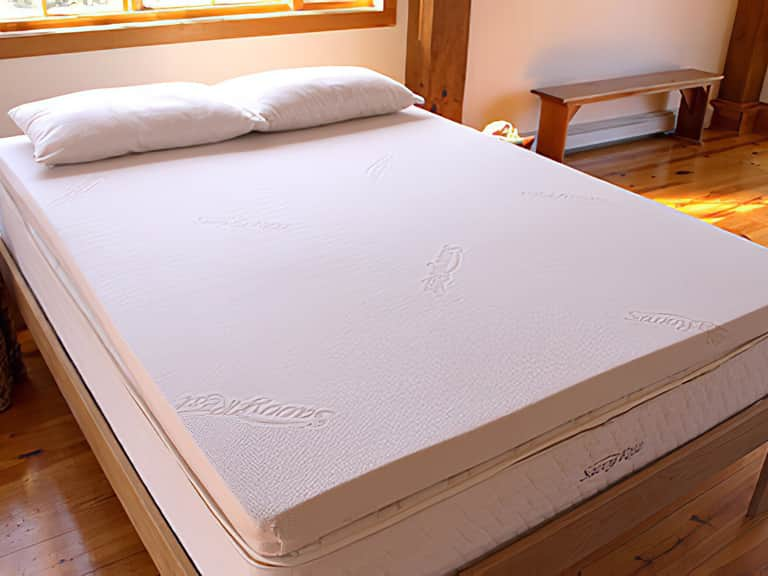
It is also worth separating a mattress from a latex topper. A topper changes the feel of an existing bed by adding a layer at the surface; it does not necessarily change the support structure beneath it. For example, the Savvy Rest Vitality Latex Mattress Topper is described as a three-inch layer of soft natural Talalay latex in an organic cotton stretch-knit cover. That makes it an example of a surface-comfort addition, not a substitute for assessing the construction of a complete Naturepedic mattress.
The details to compare in Naturepedic specifications
When looking at a brand’s range, approach each model as its own design. A collection name or a general reference to organic materials is not enough to establish what is inside a particular configuration. Read the current product page and, if anything is unclear, ask the seller to confirm the construction of the size and firmness you intend to order.
1. Latex type and how it is described
Specifications may identify latex by its production method, such as Talalay or Dunlop, or use other material descriptions. These terms tell you something about how the latex is made; they do not, by themselves, provide a complete comfort rating. Avoid treating one label as an automatic synonym for “softer,” “more supportive,” or “better.” The finished layer’s firmness, density, thickness, and role in the mattress matter too.
Look for precise wording that distinguishes the latex layer from other components, including the cover and the support core. If a description uses broad terms such as “natural,” “organic,” or “latex,” check what the certification or material statement actually applies to. A claim about one component should not be assumed to cover every layer.
2. Layer arrangement and purpose
Ask where the latex sits. Is it the top comfort layer, a layer beneath another material, or part of a deeper support structure? A top layer has a direct influence on the first impression of the bed. A layer farther down may contribute more to the way the mattress supports the body once you settle into it. The same latex can therefore play different roles in different constructions.
Look for a layer-by-layer description, not just a list of materials. The sequence helps explain how cushioning and support work together. If a model has selectable firmnesses or a configurable interior, verify whether those options alter the latex itself, the arrangement of layers, or another part of the construction.
3. Thickness and firmness
Thickness indicates how much material is present, but it does not tell you the entire story of feel. A thicker layer may allow more compression before the firmer material below becomes noticeable, while a thinner layer may make the underlying structure more apparent. The effect depends on firmness and the layers surrounding it.
Firmness descriptions are not perfectly standardized across brands. “Medium” is useful as a starting point, not a precise measurement shared by every manufacturer. Consider the description alongside your own experience of comfort, your usual sleep position, and the conditions of any in-person trial or at-home return policy.
4. The rest of the mattress
Comfort is influenced by the complete build. A cover can affect the first touch and how freely the surface moves. A base layer can influence stability, while other cushioning materials may change pressure distribution and responsiveness. A mattress with latex in one layer may still feel quite different from another latex-containing bed if their other components are not alike.
Compare the full material list, including the support core and any quilted or comfort layers. This is particularly important when evaluating claims about breathability or natural and organic content. Those qualities should be understood in the context of the whole mattress, rather than inferred from the presence of one material.
How layers can affect pressure relief and support
Pressure relief is the way a sleep surface cushions areas that bear more weight. Shoulders and hips can be especially noticeable for side sleepers, while back sleepers may pay closer attention to whether the surface feels evenly supportive. Body shape, weight distribution, sleeping position, and personal comfort all influence the experience.
A softer latex layer may feel more accommodating at first contact, but softness alone does not establish that a mattress will provide the right support. If the upper layer compresses too readily for a particular sleeper, or if the total build does not suit their body, the result may feel less comfortable. Conversely, a very firm surface may feel insufficiently cushioning to someone who prefers more give at the shoulders or hips.
The most useful question is not “Which firmness is best?” but “How does this construction feel for me in my usual position?” When trying a mattress, give yourself time in more than one position. Notice whether you feel pressure building, whether you can change positions comfortably, and whether the surface seems to keep your body supported. These are personal observations, not a diagnostic test.
For couples, differing preferences can make a single firmness choice more complicated. Compare available configurations and clarify whether the brand offers options that address different sides or comfort needs. Do not assume that a model can be customized simply because another model in the collection can.
Airflow, warmth, and the sleep environment
Latex is often discussed in relation to airflow and temperature, but no material description can promise that every sleeper will feel cool. Temperature comfort is shaped by more than the latex itself: the cover, other layers, bedding, bedroom conditions, and an individual’s own heat sensitivity all contribute. A mattress that feels comfortable to one person may feel too warm or too cool to another.
When comparing models, look for information about the complete construction and cover. If temperature is a priority, ask whether the specification describes an open or ventilated structure, and what that means for the specific layer. Treat words such as “breathable” as a useful prompt for questions, not as a guarantee of a particular sleep temperature.
The bedroom environment also matters. Lightweight bedding, a comfortable room temperature, and fabrics suited to the season can influence how warm the bed feels. A mattress material may contribute to the overall experience, but it is only one element of a restful sleep setting.
A considered comparison, not a quick label check
Instead of comparing model names alone, make a simple side-by-side note of each bed’s stated construction. Include the latex type, the position and thickness of each latex layer, firmness choices, other materials, and the foundation or support structure. Record what is confirmed and what still needs clarification. This turns an assortment of product language into a more legible comparison.
| What to compare | Why it matters | Question to ask |
|---|---|---|
| Latex type | Identifies the material description for that layer, but does not alone determine feel. | What type of latex is used in this exact model and configuration? |
| Layer position and thickness | Helps clarify whether latex shapes surface comfort or contributes farther down in the build. | Where is the latex layer, and how thick is it? |
| Firmness choices | Provides a starting point for considering comfort, while recognizing that labels vary. | What changes between the available firmness options? |
| Complete construction | Other layers and the support core influence the mattress as a whole. | Can I review the materials and their order from top to bottom? |
| Trial, returns, and warranty | Sets expectations if the feel is not right after purchase. | What are the current terms, requirements, and time limits? |
Confirm that the information applies to the model, size, and firmness you are actually considering. Retail descriptions can be concise, and product specifications or policies may be updated. If there is a discrepancy between a general collection page and an individual product listing, seek clarification before ordering.
Fit begins with your sleep habits
Before reviewing options, take a moment to identify what you want a new mattress to change. Is your current surface too firm, too soft, or simply worn? Do you sleep mainly on your side, back, or stomach? Do you prefer a springier surface or a more contouring one? Your answers can make a long list of specifications feel more purposeful.
- Side sleepers: Notice whether the shoulder and hip feel comfortably cushioned, while the rest of the body feels supported.
- Back sleepers: Pay attention to whether the surface feels balanced rather than sharply firm or excessively yielding.
- Stomach sleepers: Consider whether the mattress allows a comfortable, supported position without an unwanted sense of sinking.
- Combination sleepers: Notice how easily you move between positions and whether the surface responds in a way you like.
These are practical prompts, not rules. People vary, and a sleep position does not automatically prescribe one ideal firmness. If you have persistent pain, numbness, or another health concern, mattress shopping is not a substitute for appropriate medical advice.
Try, return, and maintain with care
Where possible, test a mattress under conditions that resemble your normal sleep: spend enough time on it, use your usual position, and notice the comfort of the whole body rather than only the initial surface impression. An in-store tryout can help you compare immediate feel, but it cannot perfectly reproduce a full night’s rest.
If considering an online purchase, read the current trial and return terms before placing an order. Check the length of the trial, any required break-in period, return arrangements, fees, and whether the policy differs by product or delivery location. Warranty coverage is a separate matter from a comfort trial; review what it covers and how a claim is assessed.
Follow the care instructions for the exact mattress. Use a foundation that meets the manufacturer’s requirements, rotate or turn the mattress only if permitted, and choose a protector compatible with the bed’s care guidance. A protector can help manage everyday spills and wear, but its construction may also affect the feel of the surface, so consider that when assessing comfort.
Questions worth asking before you choose
- What materials are used in this exact Naturepedic model, from the sleep surface down to the support core?
- What latex type is specified, where is it placed, and how thick is the layer?
- What changes between firmness or configuration options?
- Do material or certification statements apply to the whole mattress or to particular components?
- What foundation does the manufacturer recommend?
- What are the current delivery, trial, return, and warranty terms?
- Can I test the mattress in person, and does the seller have any guidance for allowing it to settle in?
Clear answers are more useful than a crowded list of reassuring adjectives. A strong comparison makes the construction understandable and gives you a fair sense of what to expect, while leaving room for the fact that comfort is individual.
Frequently asked questions
Does every Naturepedic mattress use latex?
Do not assume that every model or configuration uses the same materials. Check the current specifications for the exact Naturepedic mattress you are considering, including its layers and available firmness choices.
Does a thicker latex layer always feel softer?
No. Thickness can influence how much a layer compresses and how much the layers below it are felt, but firmness, material characteristics, and the rest of the construction also matter. Compare the full build rather than treating thickness as a stand-alone comfort rating.
Is natural latex automatically the right choice for allergies or sensitivities?
Material suitability is personal. Read the full material and certification information, ask the manufacturer about any specific concern, and consult a qualified health professional if you have a known allergy or medical sensitivity. Broad labels alone cannot establish suitability for an individual.
Can a latex topper make a mattress feel different?
Yes. A topper adds material at the sleep surface and may change cushioning or the initial feel. Its effect depends on the topper and the mattress underneath; it will not necessarily correct a worn or unsuitable support structure.
The lasting impression is the whole construction
Latex can be a compelling part of a mattress, but the most helpful comparison is always more specific than a material name. Examine the type of latex, its thickness and place in the layer stack, the available firmnesses, and the materials that complete the bed. Then connect those details to your own preferences for pressure relief, responsiveness, and temperature comfort.
When exploring Naturepedic options, treat each model as an individual design and verify current specifications and policies before deciding. A thoughtful purchase is less about chasing one supposedly perfect material and more about understanding what is beneath you—and choosing a construction that feels right for your body, your bedroom, and the way you sleep.